
Digital Product Passports, Built for Real Supply Chains
We help fashion and textile brands build Digital Product Passports that meet EU requirements and actually work in practice. Using The Chain platform and hands-on consultancy, we collect, structure, and maintain verified product and supply-chain data so your DPPs are traceable, compliant, and ready for 2027 and beyond.
Our DPP Services
-
We assess where your data stands today and map a clear path to ESPR-aligned DPP compliance without rebuilding your systems.
-
We gather product, material, supplier, and impact data and structure it according to EU requirements using standardised datasets.
-
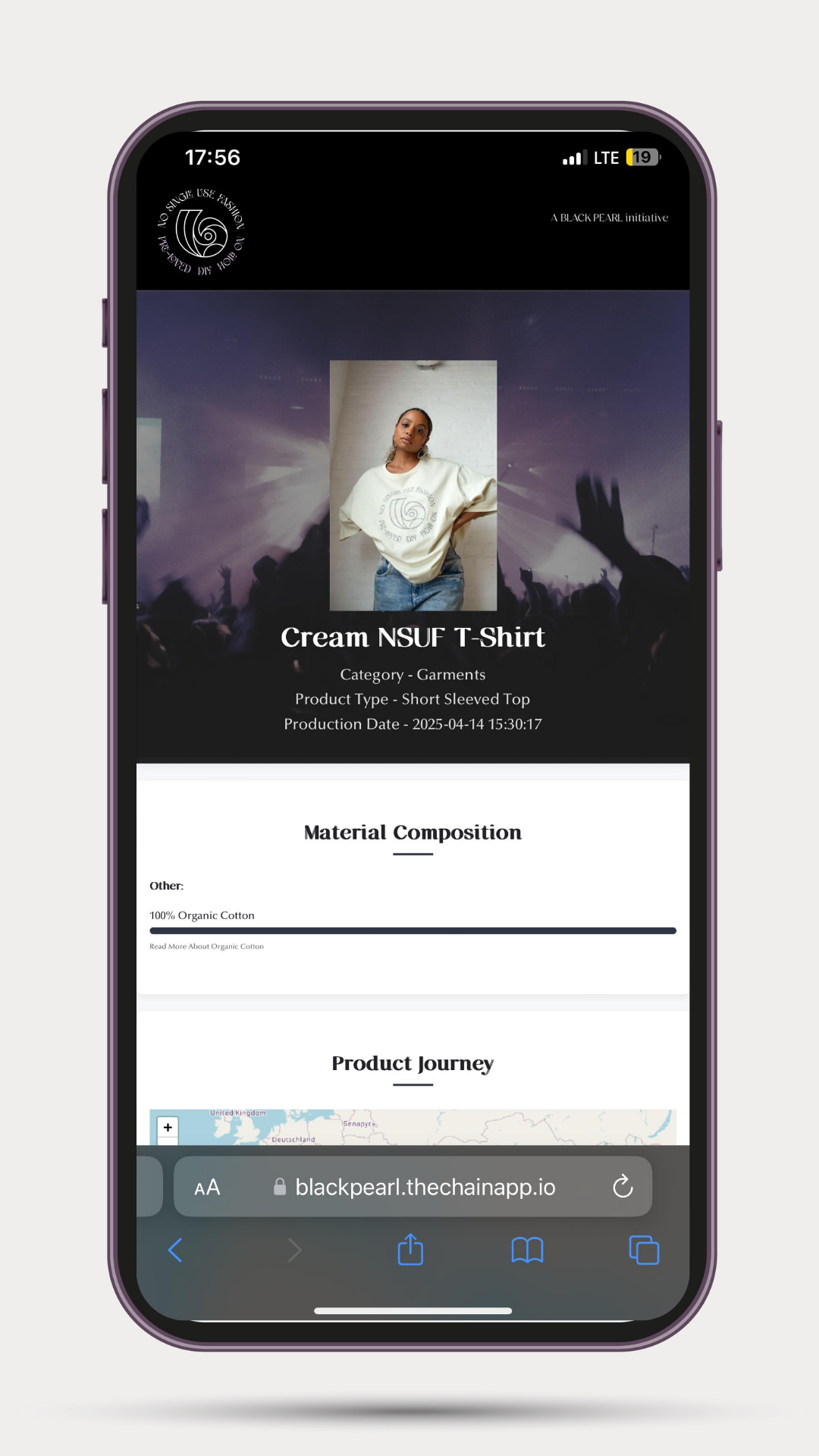
We generate Digital Product Passports for individual garments and link them through QR codes or URLs that live with the product.
-
We maintain your DPPs over time with version control, data governance, and evolving regulatory alignment.
Explore how we support brands at every stage of Digital Product Passport readiness.
How Digital Product Passports are Generated with The Chain Platform
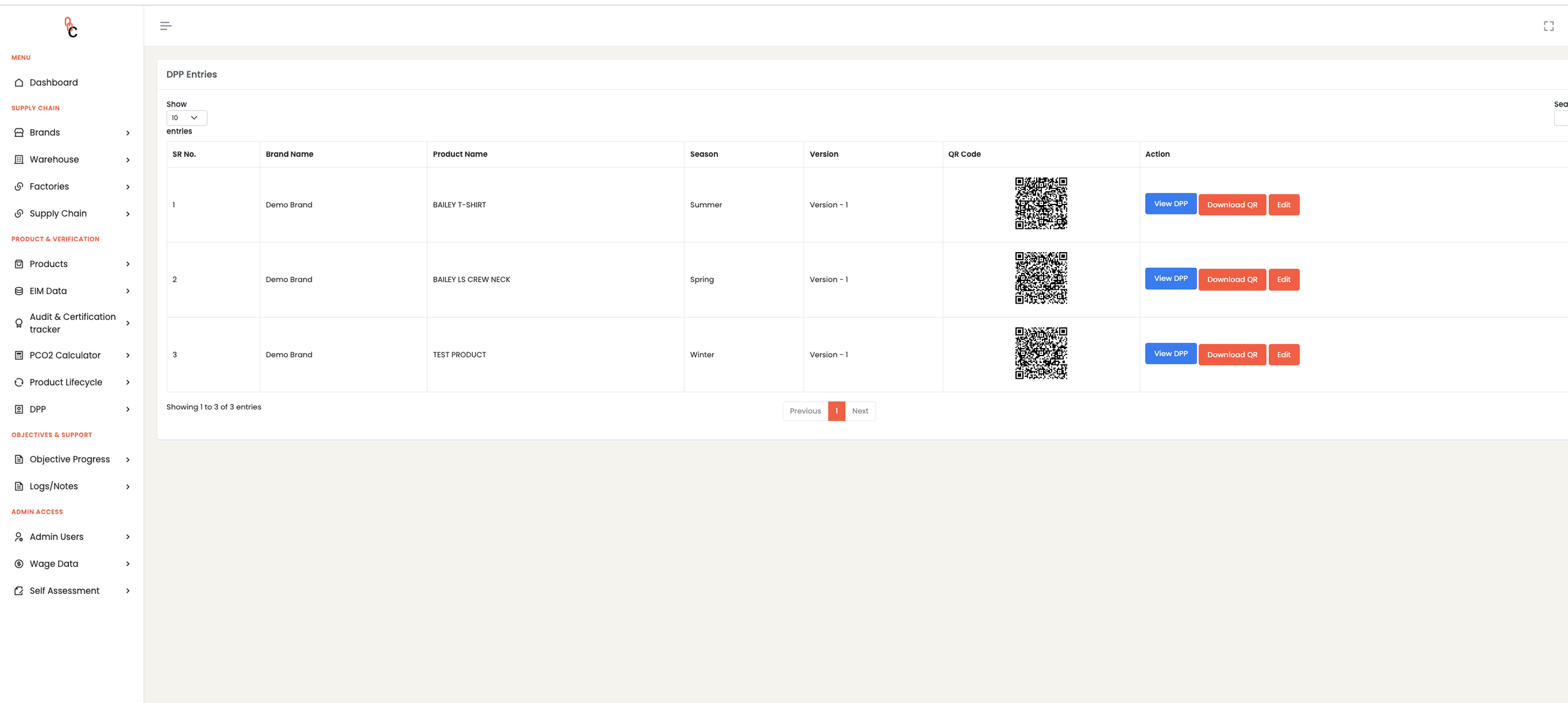
Each Digital Product Passport is generated at product level and linked to a live digital record within The Chain.
The passport brings together product, material, supply-chain, and impact data into one structured view that can be accessed by regulators, brands, and consumers. All updates flow back into the same record over time, keeping the DPP accurate and up to date throughout the garment’s lifecycle.
We start with the data you already have, fill critical gaps, and structure everything so it stands up to EU scrutiny. Our work combines sustainability expertise with a robust data platform, ensuring your DPPs remain accurate, auditable, and usable throughout the product lifecycle.
Great DPPs come from clear structure, verified data, and systems designed for change.

DPP Data Points We Cover for Brands
2024–2026
Early DPP readiness and live pilots
Structured core datasets
Proxy and modelled data allowed under ESPR
By 2027
~70+ structured datapoints per product
Mandatory textile DPP alignment
EU-standard data structures
By 2033
On track for ~180 datapoints
Deeper lifecycle and circularity data
Expanded traceability and verification
Today, we meet a significant share of early textile DPP requirements under EU guidance. Our systems are designed to deliver more than 70 structured datapoints per product by 2027, with the capability to scale toward around 180 datapoints as delegated acts and standards develop through 2033. Here are the datapoints below:
-
Unique product identifier (SKU or style code)
Product name, category, season
Brand or economic operator
Linkable digital record (QR or URL-based DPP)
Product imagery
-
Fibre composition by material percentage
Recycled content where applicable
Material standards and certifications
Indicative material origin (country or region)
-
Tier 1 factory name and location
Tier 2 processing where known
Tier 3 raw material origin where available
Supplier country risk context
Linked supplier and material certifications
-
Product-level CO₂ footprint
Energy, water, and chemical intensity (modelled or proxy)
Transport assumptions by mode and distance
-
Living wage benchmarks
Adequate wage proxies
Wage gap indicators and ladder logic
Factory-level wage disclosures where available
Policy and code of conduct alignment
-
Care instructions
Basic repair guidance
Recyclability narrative
Fibre compatibility for recycling
-
Regulatory mapping across EU frameworks
Version-controlled data updates
Data access logic (public and restricted)
AI-powered DPP data, without the manual work
Many brands worry that Digital Product Passports will require endless manual data entry. The Chain removes that burden. Our platform parses existing documents, extracts relevant information, and automates much of the data population process, so teams do not start from scratch or rely on repetitive inputs. This significantly reduces time spent on data entry, lowers the risk of errors, and frees up internal teams to focus on decision-making rather than administration.

Frequently Asked Questions
-
The passport is accessed through a QR code placed on the garment’s care label. This ensures the DPP remains with the product throughout its lifecycle.
-
Early textile DPPs typically involve around 70 structured datapoints per product by 2027, with requirements expanding gradually as standards mature.
-
No. The Chain uses automation and AI-supported data extraction to reduce manual input and streamline DPP management at scale.
-
You should work with us for your Digital Product Passport launch because we prioritise practical compliance at a controlled cost. We help you use existing data, reduce manual input through automation, and avoid costly rebuilds by structuring DPPs to evolve with EU requirements over time.
-
You can reach us anytime via our contact page or email. We aim to respond quickly, usually within one business day.
-
We offer flexible pricing based on project type and complexity. After an initial conversation, we’ll provide a transparent quote with no hidden costs.