
Where Should You Place Digital Product Passports on Garments?
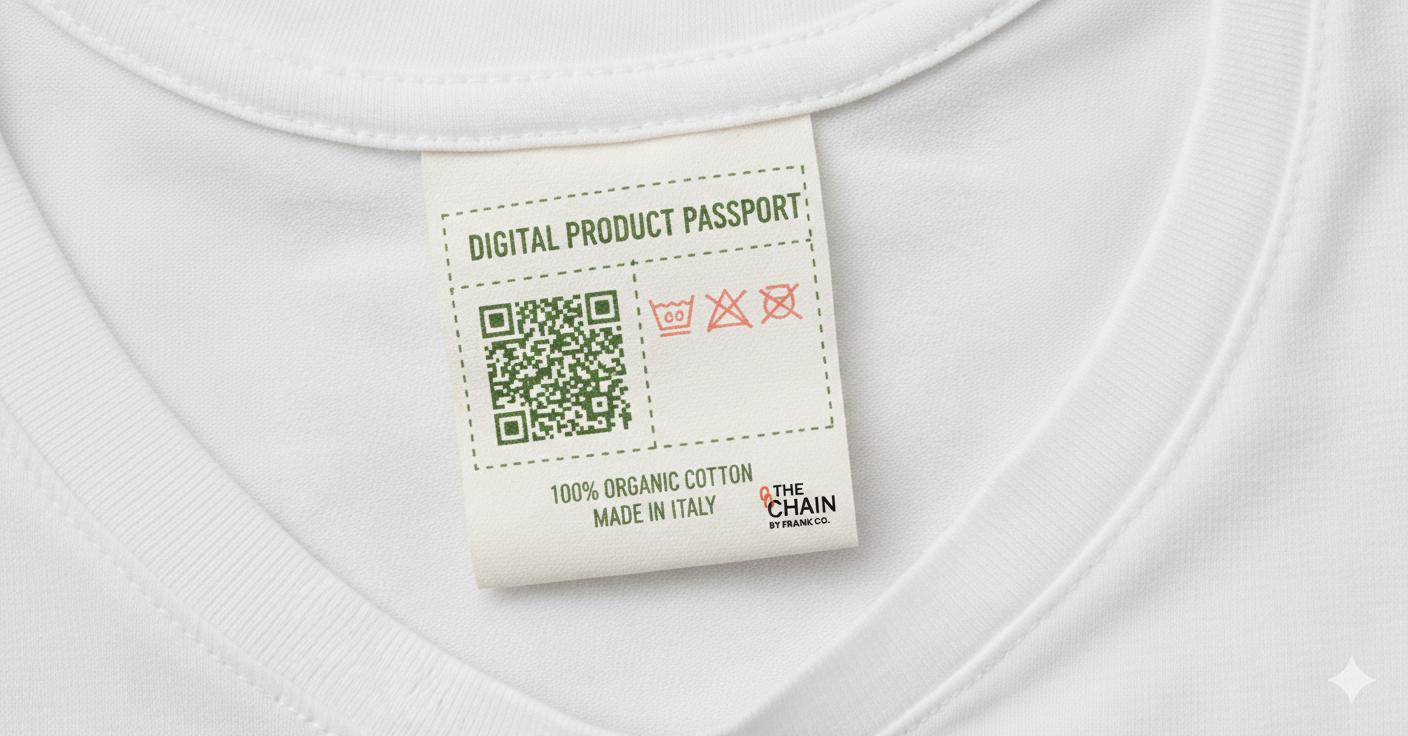
As the fashion industry moves rapidly toward full transparency, one question grows more important by the day: where should brands place Digital Product Passports (DPPs)?
It might seem like a small detail, yet placement can dramatically shape user experience, compliance, and brand engagement. In this post, we will break down what a DPP is, the right placement, how to create one, and what to look out for.
What Is a Digital Product Passport?
A Digital Product Passport is a digital record linked to a physical garment. It includes verified data about materials, origin, certifications, carbon footprint, production processes, and care instructions. Under forthcoming EU regulations, DPPs will become mandatory for many textile products by 2027. As a result, brands must not only compile accurate data, but they must also ensure that consumers can easily access it.
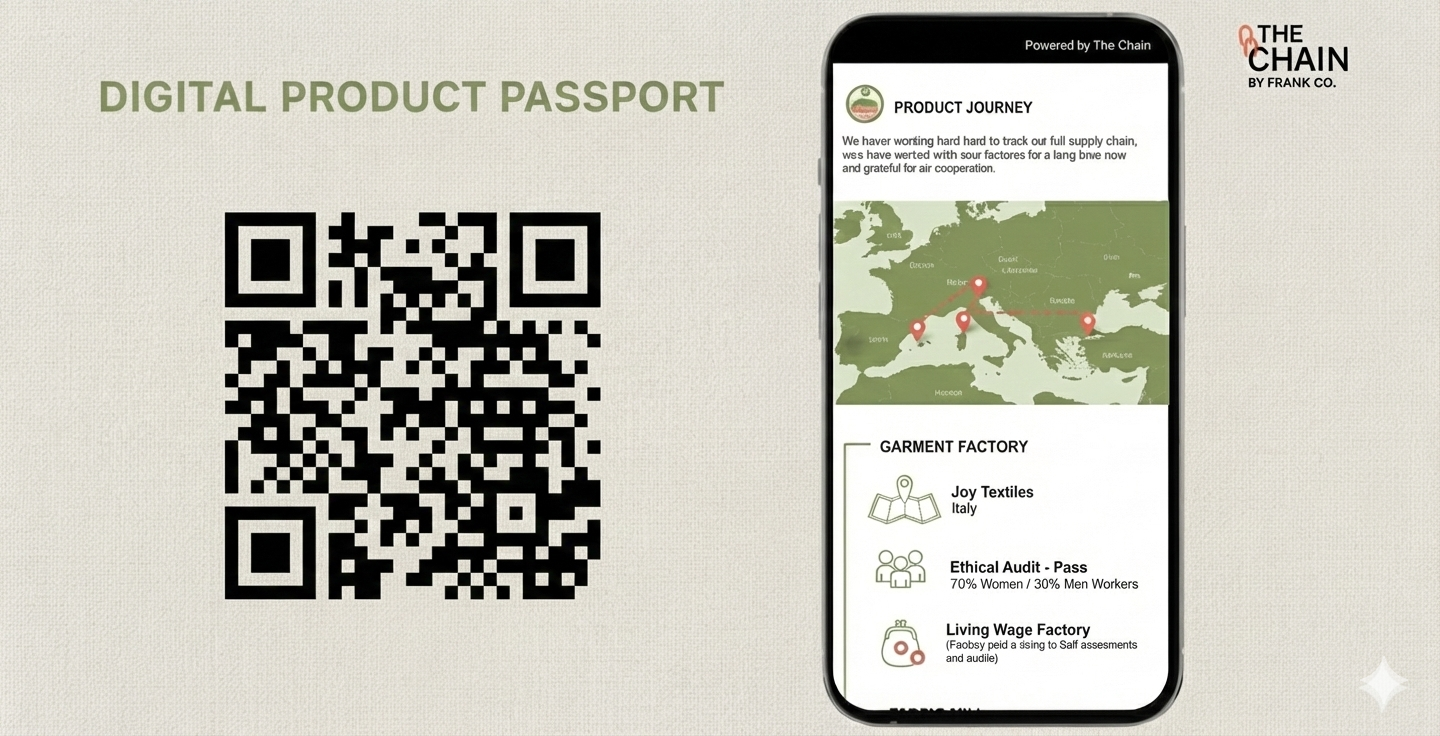
Why Placement on the Garment Matters
Some brands attach DPP QR codes to swing tags, hoping buyers will scan them. Yet swing tags are disposable. Once removed, the link to DPP disappears. This method reduces the passport to a one-time formality rather than an ongoing communication tool.
According to EU regulations, the Digital Product Passport (DPP) is intended to remain accessible for the lifetime of the product. While it may technically be placed on packaging or swing tags, this is problematic for garments, as packaging and swing tags are rarely retained beyond the first point of sale. Placing the DPP directly on the garment — for example via a QR code screen-printed at the back neck or interior hem, or printed on the care label — ensures the customer can revisit the DPP throughout the product’s use phase and beyond.
First, it ensures the passport survives the garment’s lifecycle. Second, it turns every scan into a potential touchpoint: for reuse, resale, laundry care, or recycling. In other words, the DPP becomes a living link between brands and consumers, beyond the moment of purchase. By placing the passport directly on the fabric, the brand signals that transparency is not optional but integral. It communicates respect for both the product and its owner.
By placing the passport directly on the fabric, the brand signals that transparency is not optional but integral. It communicates respect for both the product and its owner.
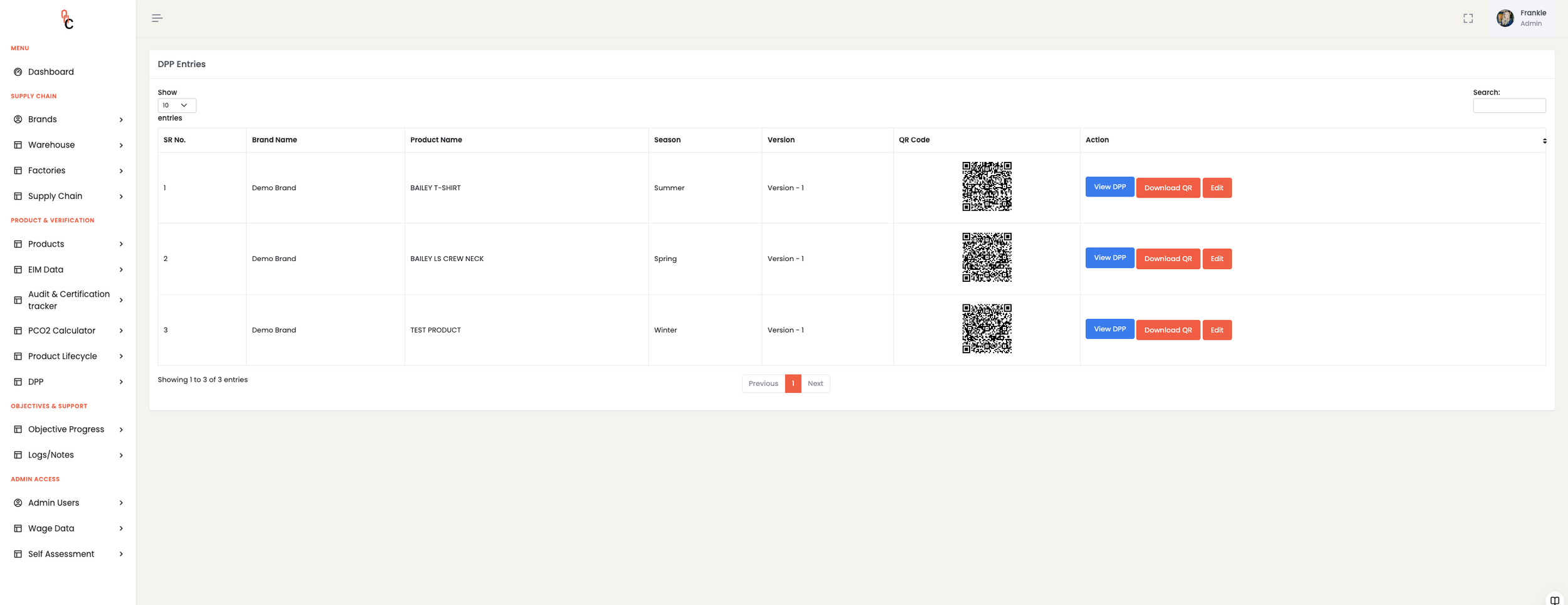
A snapshot of brand’s DPP page where they can download the QR code with all relevant information via The Chain platform
How to Create a Digital Product Passport on Garments
To embed DPPs properly, brands need a reliable process that combines data integrity and physical production. Here is a simple workflow:
Collect accurate data — material composition, supplier history, factory audits, carbon and water footprint, certifications, and care guidelines.
Generate DPP entries — using a platform that links all data to unique product IDs.
Design a durable QR code tag — printed on a woven label or inside seams, using high-contrast printing and waterproof ink.
Integrate DPP into production — include the label in garment construction so it cannot be easily removed without damage.
Test scan ability — ensure the QR remains accessible after washing, wearing, and trimming.
The Chain platform was built and designed by The Frank Impact Company, a sustainability consulting company, to make it easy for fashion brands to track and manage all of the data stages and information required to generate compliant, durable DPPs.
What a Proper Garment-Based DPP Setup Should Include (based on what we know so far, pending final must-have list by the EU)
A robust garment-based DPP should deliver:
Material composition and origin (raw material source, percentage recycled content)
Manufacturing location (factory data, tier level, audit history) and production date
Environmental impact data (estimated CO₂ emissions, water use, recyclability) (optional for now)
Certifications and compliance documentation (e.g. sustainable textile certificates, labor standards)
Care, repair, and end-of-life guidance — including recommended recycling or disposal routes
A unique identifier (QR code ) that links permanently to the product’s digital passport portal was set up to support ongoing access and updates.
What Are the Benefits of a Garment-Embedded DPP
Embedding DPPs directly on garments unlocks advantages that swing tags cannot deliver:
Long-term traceability: The DPP remains accessible through the life of the garment, even if the swing tag is removed.
Continuous consumer engagement: Brands can update their passports with new data, for example, care reminders, repair guides, recycling options, or loyalty offers each time the garment is scanned.
Resale and circularity support: Second-hand markets and recycling schemes require a trusted product history. A garment-embedded DPP ensures provenance and boosts resale value.
Regulation of compliance: As the EU gears up for mandatory DPP legislation, brands using on-product passports will already meet the spirit and detail of the rules.
Brand integrity and trust: Transparency becomes a fundamental attribute of the product itself, not just a marketing add-on.
Is the EU Digital Product Passport Mandatory and Why Does It Matter?
Yes. EU legislation under the Ecodesign for Sustainable Products Regulation (ESPR) and forthcoming extended producer responsibility rules aims to make DPPs or equivalent Traceability records mandatory for textile products. By 2027, any brand selling within the EU will likely need to provide accessible product data for every item.
Embedding the passport on the garment itself offers a practical, future-proof solution. It protects the record from being lost, classed up for resale, or excluded from recycling schemes. It also ensures consumer access from first wear to end-of-life. Brands that adopt on-product DPP placement early avoid compliance risk and set themselves apart in transparency and quality.
Who Is Responsible for the Digital Product Passport
The responsibility rests primarily on the brand or retailer. They must ensure data accuracy, maintain supply chain transparency, and embed the passport in a durable, accessible form.
Consultancies such as Frank Impact Company can support this process. We help brands compile verified data, map supply chains, draft sustainability and traceability policies, and use our proprietary platform, The Chain platform, to generate robust, regulation-ready DPPs embedded directly on garments.
Final Thoughts
Where you place your Digital Product Passport matters just as much as what information you include in it. On-product placement is more than a technical detail; it determines longevity, compliance, engagement, and trust. This is exactly how we helped Black Pearl launch their DPPs.
By embedding DPPs in the garment, brands demonstrate commitment to transparency and responsible fashion. They give customers a tool, not just a tale.
If you want support with DPP implementation, supply chain traceability, or compliance-ready sustainability data, Frank Impact Company & The Chain stand ready to help. Schedule a demo here or talk to a sustainability consultant for free.